
GUIDELINES FOR AUTHORS
PRE-SUBMISSION REQUIREMENTS
Before submitting a manuscript, authors must carefully prepare specific documentation and ensure the manuscript strictly meets the journal's language and ethical standards.
Required Documentation
- Authorship Agreement Form: A completed form detailing the specific contributions of each author must be uploaded along with the manuscript via the journal's online submission system. Alternatively, it can be emailed directly to the Editorial Office of the INPHARNMED Journal (https://ejournal.almaata.ac.id/index.php/INPHARNMED).
- Covering Letter: A formal covering letter is mandatory. It must explicitly state the scientific novelty of the study, name any sources of financial support, declare any conflicts of interest existing for individual contributors, and explicitly mention any previous presentations of the paper in meetings or conferences.
- To enhance the visibility, readability, and citation potential of the manuscript, authors are highly encouraged to submit a Graphical Abstract alongside their main manuscript. A Graphical Abstract is a single, concise, and highly visual summary of the article's main findings, core methodology, and scientific conclusions. It must be prepared by the authors using graphic design software such as Canva, BioRender, Microsoft PowerPoint, Adobe Illustrator, or equivalent software. The use of AI-generated images or AI-generated graphical abstracts is not permitted unless explicitly disclosed and approved in accordance with the journal's Artificial Intelligence Policy.
- Ethical Declaration: Authors must ensure and declare that full and informed consent was obtained from human subjects and that the work strictly complies with the humane and ethical principles of the Helsinki guidelines.
- Professional Proofreading and Language Editing: All papers submitted to this journal must be written in formal, grammatically correct, and good academic English. To maintain the high scientific quality and readability required for international indexation (e.g., DOAJ, Scopus), authors must adhere to the following language editing policies:
- When Proofreading is REQUIRED: Authors for whom English is not their native language are highly encouraged to have their paper checked by a professional English editing service before submission. Furthermore, professional proofreading becomes strictly mandatory if the Editorial Board or peer reviewers determine during the Initial Editorial Assessment that the manuscript's English quality is substandard, contains major grammatical errors, or impedes scientific clarity.
- Proof of Editing (Certificate): When the Editorial Board requests professional proofreading, authors must use a credible, professional English editing or proofreading institution. Authors are required to submit a valid Certificate of Proofreading alongside their revised manuscript as proof of language improvement.
- When Proofreading is NOT REQUIRED: Proofreading by an external agency is not mandatory if the authors are native English speakers, or if the initially submitted manuscript already demonstrates a very high standard of fluent academic English that requires no substantial language correction, as deemed by the Managing Editor.
- PLAGIARISM CHECK REQUIREMENT: Authors must upload a Turnitin Similarity Report during the initial submission and after the final revision. The similarity index must not exceed 20%
PEER REVIEW AND PUBLICATION PROCESS
To maintain the highest standards of scientific integrity, transparency, and publication ethics, INPHARNMED (International Journal of Pharmacy and Pharmaceutical Sciences) implements a rigorous double-blind peer review process. Every submitted manuscript undergoes several editorial and scientific evaluation stages before being considered for publication. The minimum processing time from initial submission to online publication is approximately three (3) months (12–16 weeks). Therefore, authors are strongly encouraged to submit their manuscripts well in advance of their targeted publication issue.
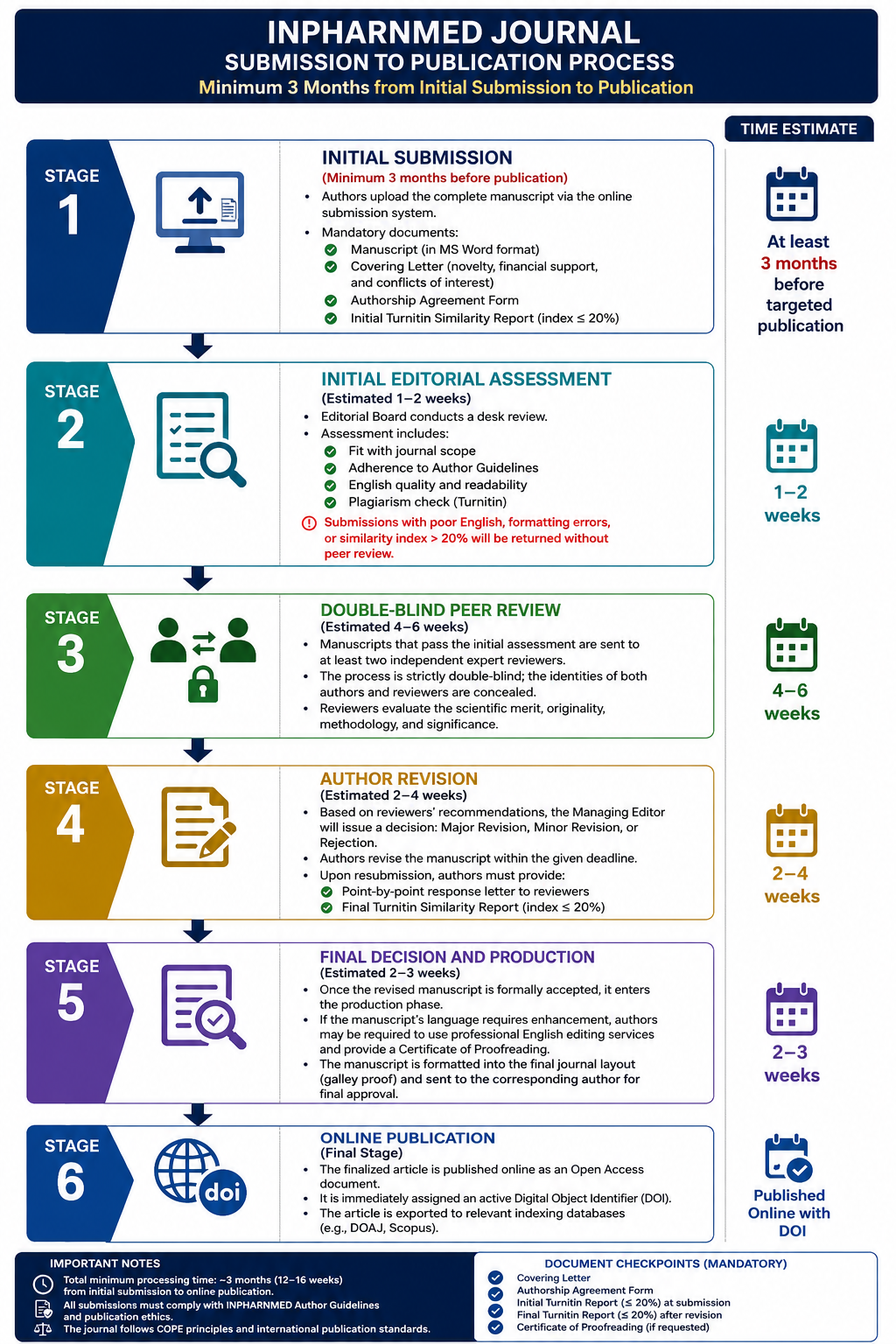
Figure 1. Submission to Publication Process
Stage 1. Initial Submission
(Minimum 3 Months Before the Target Publication Date)
Authors must submit their manuscript through the online submission system (OJS).
The submission must include the following mandatory documents:
- Manuscript prepared according to the INPHARNMED Author Guidelines (Microsoft Word format). <li ">Cover Letter explaining the novelty and significance of the study, funding information (if any), and declaration of conflicts of interest.
- Authorship Agreement Form signed by all authors.
- Initial Turnitin Similarity Report showing a similarity index of 20% or below.
Authors are responsible for ensuring that all files are complete before submission. Incomplete submissions will not proceed to the editorial assessment stage.
Stage 2. Initial Editorial Assessment
(Estimated Processing Time: 1–2 Weeks)
After submission, the Editorial Office performs an initial screening (desk evaluation).
The manuscript will be evaluated based on:
- Compatibility with the journal's aims and scope.
- Compliance with the Author Guidelines.
- Completeness of submission documents.
- Quality of English language.
- Scientific presentation and manuscript organisation.
- Initial plagiarism screening using Turnitin.
Manuscripts with any of the following conditions may be returned without external peer review:
- Similarity Index greater than 20%.
- Outside the journal scope.
- Poor English readability.
- Failure to follow formatting requirements.
- Missing mandatory submission documents.
Authors may be invited to resubmit after making the necessary corrections.
Stage 3. Double-Blind Peer Review
(Estimated Processing Time: 4–6 Weeks)
Manuscripts that successfully pass the initial editorial assessment are assigned to at least two independent expert reviewers.
INPHARNMED applies a double-blind peer review system, in which both authors and reviewers remain anonymous throughout the review process.
Reviewers evaluate manuscripts based on:
- Originality and novelty.
- Scientific significance.
- Research methodology.
- Ethical compliance.
- Data validity and reliability.
- Interpretation of results.
- Quality of discussion.
- Conclusions.
- Relevance of references.
Based on the reviewers' recommendations, the Editorial Board will determine one of the following decisions:
- Accept
- Minor Revision
- Major Revision
- Reject
If conflicting reviewer recommendations occur, the Editor may assign an additional reviewer before making the editorial decision.
Stage 4. Author Revision
(Estimated Processing Time: 2–4 Weeks)
Authors receiving a decision of Minor Revision or Major Revision are required to revise their manuscript according to the reviewers' comments.
During resubmission, authors must upload:
- Revised Manuscript (with tracked changes if requested).
- Clean Final Manuscript.
- Detailed Point-by-Point Response Letter explaining how each reviewer comment has been addressed.
- Final Turnitin Similarity Report with a similarity index of 20% or below.
Failure to submit revisions within the specified deadline may result in withdrawal of the manuscript from the publication process.
If necessary, the revised manuscript may be returned to the reviewers for additional evaluation.
Stage 5. Final Decision and Production
(Estimated Processing Time: 2–3 Weeks)
After the revised manuscript satisfies the reviewers and editors, the Editor-in-Chief makes the final publication decision.
Accepted manuscripts enter the production stage, which includes:
- Final editorial review.
- Copyediting.
- English language editing (if required).
- Layout editing and typesetting.
- Galley proof preparation.
If the editorial board determines that language quality requires further improvement, authors may be requested to use a professional English proofreading service and submit a Certificate of Proofreading.
The corresponding author will receive the final galley proof for approval before publication. Only minor typographical corrections are permitted at this stage.
Stage 6. Online Publication
After receiving the author's final approval, the manuscript is officially published online as an Open Access article.
Each published article will receive:
- A permanent Digital Object Identifier (DOI).
- Online publication on the INPHARNMED Journal website.
- Metadata registration.
- Export to indexing and abstracting databases according to the journal's indexing status (e.g., DOAJ, Scopus, Crossref, Google Scholar, and other relevant databases).
- The published version becomes the official Version of Record (VoR).
Important Notes
- Authors should submit their manuscripts at least three (3) months before the intended publication issue.
- All submitted manuscripts are screened using Turnitin.
- The similarity index must not exceed 20% at both the initial submission and final revision stages.
- Authors are responsible for the originality, accuracy, and ethical integrity of their work.
- Manuscripts may experience additional processing time depending on the number of revision rounds and the responsiveness of both reviewers and authors.
- Submission does not guarantee acceptance. Publication decisions are based solely on scientific merit, originality, ethical compliance, and reviewers' recommendations.
- INPHARNMED reserves the right to reject manuscripts that do not comply with the journal's editorial policies, publication ethics, or technical requirements.
GENERAL MANUSCRIPT FORMATTING
To maintain high publication standards and ensure seamless indexation processes, authors must strictly adhere to the following general formatting rules throughout the manuscript:
- Language and Readability: All papers submitted to this journal must be written in good, formal, and grammatically correct academic English. Authors for whom English is not their native language are highly encouraged to have their paper checked by a professional English editing service before submission to ensure scientific clarity.
- Data Presentation and Visual Limits: The manuscript must not display raw, unprocessed data within the journal text. All data must be synthesised and properly presented. Furthermore, the ideal combined total of tables and figures is 8 items per manuscript, with a strict limit of a maximum of 8 visual elements in total.
- Tables and Figures Guidelines
- Figures: High-resolution image files must be submitted separately from the main manuscript document. Photographs and micrographs must have a minimum resolution of 300 dpi, whereas line art, diagrams, or charts must be at least 600 dpi. The figure number must be bolded (e.g., Figure 1), with only the first letter of the caption capitalised, and the text centred. Ensure that the image and its corresponding caption appear on the same page. If an image is too large for a two-column layout, it may be formatted to span a single column across the entire page width.
- Tables: The table number must be bolded (e.g., Table 1). Capitalise only the first letter of the table title and align the text to justify (Ctrl + J). Tables must be single-spaced and should not be split across multiple pages. Any table notes or annotations must be placed immediately below the table on the same page. If the table is too wide for a two-column layout, format it as a single column.
- Mathematical Equations and Formulas : All mathematical equations and formulas must be clearly typed using a standard equation editor (e.g., Microsoft Word Equation Editor or MathType). The use of image-based formulas (e.g., screenshots or pictures) is strictly prohibited to ensure text searchability and high-quality typesetting. Each equation must be displayed on a separate line from the main text and numbered consecutively. The equation number must be enclosed in parentheses and strictly aligned to the right margin, e.g., (1). When referencing an equation within the main text, refer to it explicitly as "Equation 1" or "Eq. (1)".
- Supplementary Data: For graphs or charts created using spreadsheet software, authors must also submit the original editable data files (e.g., .xlsx) as supplementary material to ensure data transparency and reproducibility.
MANUSCRIPT STRUCTURE
The manuscript must be arranged in the following standard order:
Title and Authorship
- Title: The title should be short, attractive, bolded, and a maximum of 20 words. Capitalise the first letter of each word except for conjunctions.
- Authors: A maximum of six authors is permitted per manuscript.
- Affiliations: If authors are from different institutions, use superscript numbers (1, 2, 3) behind each name. Include the full name of the department/program, faculty, institution, city, and country.
- Corresponding Author: Must be indicated with an asterisk (*) and must include the complete institutional address, an active email address, a mobile phone number, and an ORCID ID.
Abstract and Keywords
Abstract: The abstract must be between 200 and 250 words and written entirely in italics. It must be strictly structured using these exact headings: Background, Objective, Methods, Results, and Conclusion. The Methods and Results sections must use the past tense.
Keywords: Provide a maximum of 5 words or phrases, separated by semicolons. Authors are highly recommended to use standardised terms from the Medical Subject Headings (MeSH) vocabulary (https://www.ncbi.nlm.nih.gov/mesh/).
INTRODUCTION (Bold, All Capital Letters) Provide a logical flow from a broad global context to the specific focus of the study. Briefly review relevant recent literature, critically highlight specific unresolved issues or the "research gap," and explicitly state the main objective of the research.
MATERIALS AND METHODS (Bold, All Capital Letters) This section must be divided into three specific subheadings:
- Materials: Detail all critical reagents, specifying purity, grade, manufacturer's name, city, and country. For clinical studies, define the study population, including sampling method, final sample size, and itemised inclusion/exclusion criteria.
- Tools: Mention only critical analytical instruments that influence research outcomes (model, manufacturer, city, country). For clinical studies, detail the primary data sources and specific clinical variables extracted.
- Method: Clearly describe the overall study design to allow full replication.
- Research Procedure Figure: Authors are strictly required to provide a flowchart/diagram created using professional graphic design tools (e.g., Canva, Figma). The use of AI image generators is strictly prohibited. Must be at least 600 dpi.
- Ethical Considerations: Explicitly state the ethical clearance approval number and the issuing institutional review board.
- Data Analysis: Conclude with a clear description of the statistical methods, software (including version), and significance levels.
RESULTS AND DISCUSSION (Bold, All Capital Letters) Present findings clearly using well-formatted tables and high-resolution figures; do not display raw data. Interpret the significance of the data immediately rather than merely describing them. Correlate findings with previous studies and explain underlying scientific mechanisms. Ensure all figures/tables are properly cited.
- Figures: Minimum 300 dpi for photos; 600 dpi for line art. Numbering must be bolded (e.g., Figure 1.), centre-aligned.
- Tables: Numbering must be bolded (e.g., Table 1.), single-spaced, justify-aligned, and not split across pages.
- Equations: All mathematical formulas must be typed using a standard equation editor (e.g., MathType). Image-based formulas are strictly prohibited. Equations must be right-aligned and numbered consecutively in parentheses, e.g., (1).
CONCLUSION AND SUGGESTION (Bold, All Capital Letters) Provide a clear and concise summary that directly answers the research objectives. Do not merely repeat the data or statistics. Evaluate the specific limitations and strengths, and provide concrete recommendations for clinical practice or further studies.
ACKNOWLEDGMENT (Bold, All Capital Letters) Acknowledge individuals or institutions providing significant assistance but do not meet authorship criteria. Explicitly declare any financial support/funding agencies, including grant numbers.
REFERENCES (Bold, All Capital Letters)
- Style: Strictly follow the Vancouver citation style, arranged numerically in the exact order of appearance in the text using bracketed Arabic numerals (e.g.,). Reference management software (Mendeley, EndNote, Zotero) is mandatory.
- Quantity & Quality: Manuscripts must contain a minimum of 25 and a maximum of 40 references. At least 80% of references must be primary scientific journal articles published within the last 5 years and indexed in Scopus.
- Mandatory INPHARNMED Citation: Authors must cite at least one (1) relevant article previously published in the INPHARNMED Journal.
- DOI / Metadata: Every journal reference must include an active, clickable DOI or HTTPS URL. Metadata (authors, title, journal name) must exactly match the OJS records. If citing an Indonesian article, the title must be translated into English with "[Indonesian]" appended.
TABLES AND FIGURES GUIDELINES
TABLES, FIGURES, AND EQUATIONS GUIDELINES
To maintain a high-quality visual presentation and adhere to international publishing standards, authors must format all tables, figures, and mathematical equations according to the following strict guidelines:
- General Visual Guidelines
- Quantity Limits: The ideal combined total of tables and figures is 5 to 8 items per manuscript, with a strict maximum limit of 8 visual elements in total.
- Data Interpretation: Authors must not display raw, unprocessed data in the journal text. Instead of merely describing the data shown in tables or figures, authors must immediately interpret their significance within the text.
- In-text Citations: All pictures, tables, and diagrams must be explicitly explained in words or sentences. They must be accompanied by clear in-text references (e.g., "The results of the infrared spectrum examination can be seen in Figure 1," or "The formula can be seen in Table 1").
- Figures Formatting
- Resolution: High-resolution image files must be submitted separately from the main manuscript document. Photographs and micrographs must have a minimum resolution of 300 dpi, while line art, diagrams, or charts must be at least 600 dpi.
- Caption Formatting: The figure number must be bolded (e.g., Figure 1). Capitalise only the first letter of the figure caption and align the text to the centre.
- Layout: Ensure the image and its corresponding caption appear on the same page. If the image is too large to fit within a standard two-column layout, it may be formatted to span a single column across the entire page width.
- Tables Formatting
- Title Formatting: The table number must be bolded (e.g., Table 1.). Capitalise only the first letter of the table title and align the text to justify (Ctrl + J).
- Layout & Spacing: Tables must be single-spaced and should not be split across multiple pages. If the table is too wide for a two-column layout, format it as a single column.
- Table Notes: Any table notes, abbreviations, or annotations must be placed immediately below the table on the same page.
- Mathematical Equations and Formulas
- Equation Editor Requirement: All mathematical equations and formulas must be clearly typed using a standard equation editor (e.g., Microsoft Word Equation Editor or MathType). The use of image-based formulas (e.g., screenshots or pictures) is strictly prohibited to ensure text searchability and high-quality typesetting.
- Numbering and Alignment: Each equation must be displayed on a separate line from the main text (insert 1 blank line space before and after the equation) and numbered consecutively throughout the manuscript. The equation number must be enclosed in parentheses and strictly aligned to the right margin, e.g., (1), (2), (3).
- Variables Definition: All corresponding variables and symbols used in the equation must be clearly defined in the subsequent paragraph (e.g., "Where Y represents the dependent variable...").
- In-text Citation: When referencing an equation within the main text, refer to it explicitly as "Equation 1" or "Eq. (1)".
SUPPLEMENTARY DATA
- Additional data or documents that are highly relevant to the research but are too extensive to be included in the main manuscript (e.g., large datasets, extra tables, or additional methodological figures) should be submitted separately as Supplementary Materials.
- To clearly distinguish them from the main text elements, all supplementary tables and figures must be numbered consecutively using an "S" prefix (e.g., Table S1, Table S2, Figure S1). These supplementary files must be explicitly cited within the main manuscript text (e.g., "Detailed patient characteristics are available in Table S1").
- Furthermore, for graphs or charts created using spreadsheet software in the main manuscript, authors must also submit the original editable data files (e.g., .xlsx format) as supplementary material to ensure research transparency and reproducibility.
PLAGIARISM CHECK REQUIREMENT
To ensure academic integrity and publication quality, authors are required to submit evidence of plagiarism screening using Turnitin at the following stages:
- Initial Submission: Authors must upload a Turnitin Similarity Report together with the manuscript during the initial submission process. The similarity index should not exceed 20%.
- Final Revised Manuscript: After receiving reviewers' comments and completing the revision process, authors must upload an updated Turnitin Similarity Report for the final version of the manuscript. This report must be submitted before the Acceptance Letter is issued.
The Editorial Office reserves the right to request additional plagiarism screening reports whenever necessary. Manuscripts that fail to meet the journal's similarity requirements may be returned for further revision or rejected.
SUBMISSION PREPARATION CHECKLIST
(Description: As part of the submission process, authors are required to check off their submission's compliance with all the following items. Submissions may be returned to authors who do not adhere to these guidelines).
- [ ] Originality & Ethics: The submission has not been previously published, nor is it before another journal for consideration. The study has received ethical clearance (if applicable), and the approval number is stated in the text.
- [ ] Plagiarism Report: A Turnitin similarity report (below 20% similarity index) is attached.
- [ ] Required Documents: The Covering Letter (stating novelty, conflicts of interest, and funding) and the signed Authorship Agreement Form (with CRediT roles) are attached.
- [ ] Graphical Abstract alongside their main manuscript.
- [ ] Manuscript Formatting: The submission file is in Microsoft Word document file format. The text adheres to the stylistic and bibliographic requirements outlined in the Author Guidelines (e.g., max 6 authors, max 20 words title, structured abstract).
- [ ] Figures, Tables & Equations: All figures (high resolution, ≥600 dpi for charts), tables, and equations (typed via Equation Editor, not images) are properly cited in the text. Methodological flowcharts are strictly generated without AI tools.
- [ ] References & DOIs: The manuscript contains 25–40 references, formatted in Vancouver style via a Reference Manager. At least 80% are from Scopus-indexed primary journals published in the last 5 years. Active DOIs/URLs are provided, and at least 1 INPHARNMED article is cited.
COPYRIGHT NOTICE
- The copyright of this journal belongs to the Editorial Board and Journal Manager with the author's knowledge, while the moral rights of the publication belong to the author.
- The formal legal aspect of journal publication accessibility refers to the Creative Commons Attribution-ShareAlike 4.0 International License (CC BY-SA 4.0), which implies that the publication can be used for non-commercial and commercial purposes in its original form as long as appropriate credit is given. Derivative works are shared under the same license.
- Every publication (print/electronic) is open access for educational, research, and library purposes. In addition to the objectives mentioned above, the editorial board is not responsible for copyright infringement.
Copyright © [Year] by Authors, published by Inpharnmed Journal. This is an open-access article distributed under the CC BY-SA 4.0 License. https://creativecommons.org/licenses/by-sa/4.0/

PRIVACY STATEMENT
The names and email addresses entered in this journal site will be used exclusively for the stated purposes of this journal. They will not be made available for any other purpose or to any other party.
For security reasons, we will assist you in creating a registration account. Please contact us via email at inpharnmed.journal@almaata.ac.id