
A Qualitative Interview Pilot to Dig Experiences and Needs of Pharmacists’ Role in Handling Disaster Management of the Mount Merapi Eruption in Yogyakarta
Article Sidebar
-
Disaster Planning; Interviews as Topic; Qualitative Research; Volcanic Eruptions
Abstract
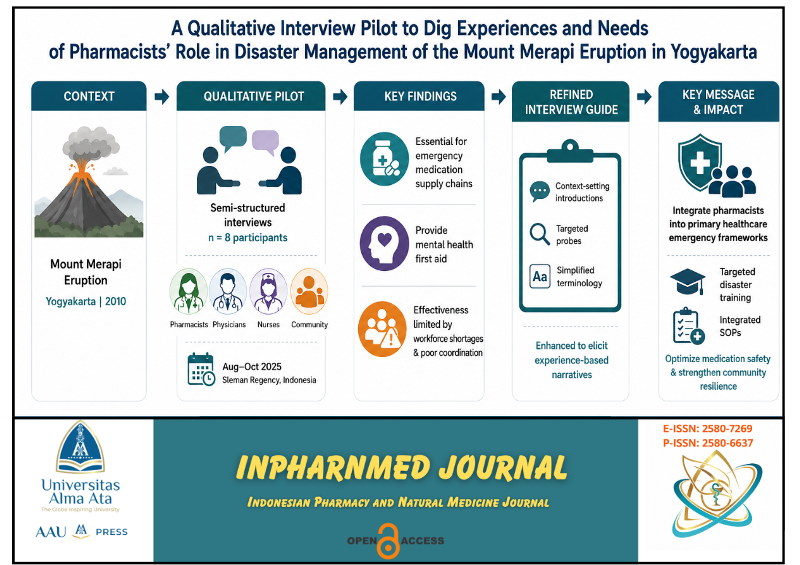
Background: Indonesia is highly vulnerable to recurrent volcanic disasters, such as Mount Merapi’s eruptions, which severely disrupt healthcare and cause profound psychosocial impacts. While pharmacists are essential to managing emergency medication logistics and patient safety, their operational constraints and frontline experiences remain significantly underexplored. Objective: This study aimed to develop, pilot, and refine a qualitative interview guide to explore the operational realities, interprofessional dynamics, and psychosocial contributions of the pharmacy workforce during the 2010 Mount Merapi eruption. Methods: A qualitative pilot study was conducted in Sleman Regency, Indonesia, from August to October 2025. Semi-structured interviews were used to collect data from eight participants—frontline pharmacists, physicians, nurses, and affected community members recruited through purposive maximum-variation and snowball sampling. The instrument underwent rigorous multidisciplinary expert validation and iterative field testing. Results: Cross-professional thematic analysis revealed that while pharmacists are vital for maintaining emergency medication supply chains and providing mental health first aid, their effectiveness is frequently hindered by critical workforce shortages and a lack of cross-sector coordination. Methodologically, the pilot phase refined the instrument by incorporating context-setting introductions, targeted probes, and simplified terminology to elicit experience-based narratives. Conclusion: This study produced a highly validated, culturally sensitive qualitative instrument tailored for disaster pharmacy research. Societally, the findings urge policymakers to integrate pharmacists into primary healthcare emergency frameworks formally. Empowering the profession through targeted disaster training and integrated standard operating procedures (SOPs) will optimize emergency medication safety, strengthen post-disaster community resilience, and directly advance the Sustainable Development Goals, specifically SDGs 3, 11, and 17.
Authors

This work is licensed under a Creative Commons Attribution-NonCommercial 4.0 International License.