
Acute Changes in Random Blood Glucose Levels Following Atorvastatin Therapy in Ischemic Stroke Patients
Article Sidebar
-
Atorvastatin; Blood Glucose; Diabetes Mellitus; Ischemic Stroke; Patient Safety
Abstract
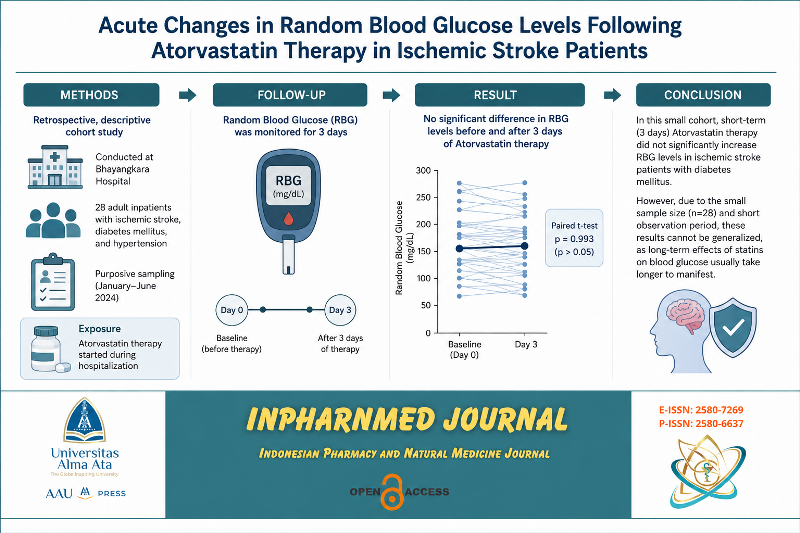
Background: Stroke involves a rapid onset of neurological deficits that last for 24 hours or more or lead to death. While Atorvastatin is highly effective for secondary prevention in ischemic stroke patients, it may cause a diabetogenic side effect that can raise blood glucose levels. Objective: This study aims to assess the immediate changes in Random Blood Glucose (RBG) levels after starting Atorvastatin therapy in hospitalized ischemic stroke patients with a history of diabetes mellitus and hypertension. Methods: This was a retrospective, descriptive cohort study using purposive sampling. The sample included adult inpatients diagnosed with ischemic stroke, known diabetes mellitus, and hypertension who were prescribed Atorvastatin at Bhayangkara Hospital from January to June 2024. Patients with incomplete medical records were excluded. RBG levels were monitored over a short-term period of 3 days. Data were analyzed using descriptive statistics and a paired t-test to compare glucose levels before and after therapy. Results: Of the 28 eligible patients, most were male (16; 57.1%) and aged 55–64 years (15; 53.6%). The most common profile included ischemic stroke, diabetes mellitus, hypertension, and dyslipidemia (8 patients; 28.6%). The paired t-test showed no statistically significant difference between baseline and 3-day post-treatment RBG levels (p = 0.993; p > 0.05). Conclusion: In this small cohort, short-term (3 days) Atorvastatin therapy did not significantly increase RBG levels in ischemic stroke patients with diabetes mellitus. However, due to the small sample size (n=28) and short observation period, these results cannot be generalized, as long-term effects of statins on blood glucose usually take longer to manifest.
Authors

This work is licensed under a Creative Commons Attribution-NonCommercial 4.0 International License.